AFFORDABLE AUTO INJECTOR RESEARCH PROJECT

This project was centered on developing a low-cost, universal intramuscular auto-injector (IMAI) designed to improve vaccine delivery for Canadians, particularly children aged 1 to 12. While current auto-injectors are often expensive, single-use, and medication-specific, our goal was to create a device that is affordable, reusable, and simple enough to be operated by trained non-medical personnel. My primary contribution to the project involved formulating prototype designs based on design necessities, and realizing the models through computer-aided design (CAD) software, particularly Fusion 360 for this project.
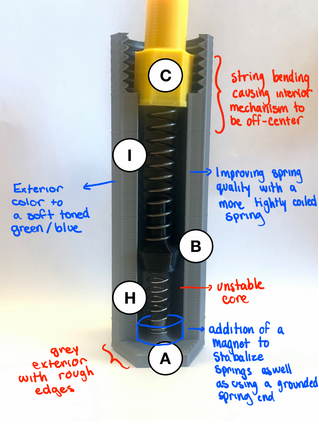
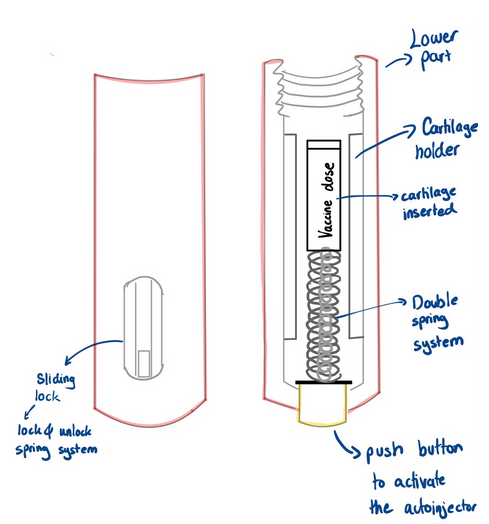
To support the engineering requirements, I created detailed CAD assemblies that simulated the internal mechanisms, made originally by significantly modifying an open source model created by a group in Western University. This included modelling a spring-loaded actuation system, needle housing, and dosage chamber, and evaluating how these components would perform under real constraints. By assembling, testing and then identifying failures in the original prototype, such as a weak, unreliable button actuation system, I was able to re-design the model to mitigate the probability of failure.

Reflection

This project played a major role in developing many of my technical skills and in deciding my long-term career direction. Throughout the design process, I had the opportunity to build detailed CAD models of our proposed intramuscular auto-injector, which pushed me to strengthen my 3D modelling skills and think more critically about how mechanical components function outside of idealistic circumstances. Iterating through multiple prototypes also taught me how to translate abstract requirements, such as safety, reusability, and ergonomics, into tangible design features, which made my CAD work far more deliberate and user-focused.

Scroll to Top